


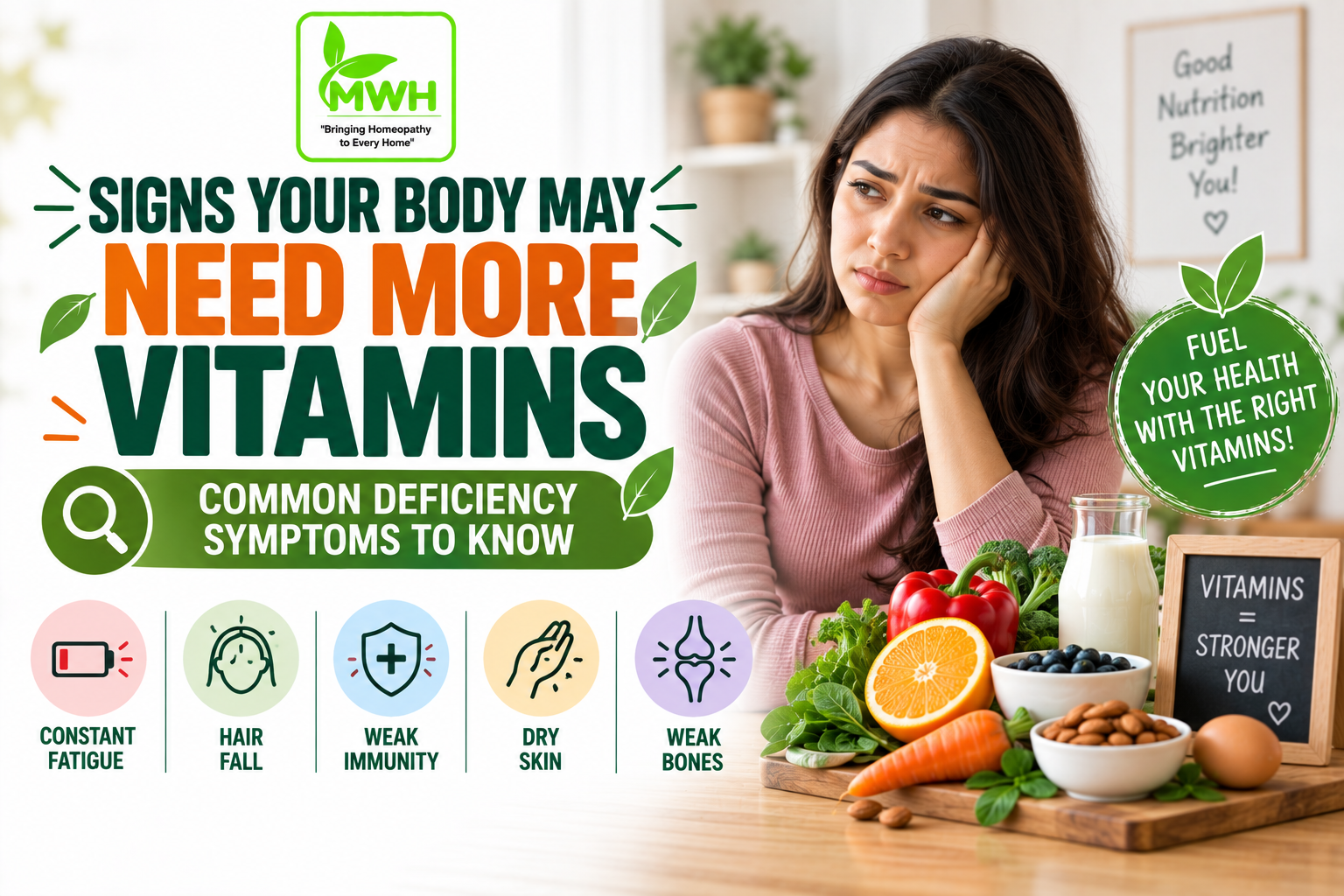
Signs Your Body Needs More Vitamins
Did you know that our body communicates with us? Due to our modern and dynamic lifestyle, we often ignore these messages. Because of this neglect, we don’t even realize when our health gives up on us until it decides to leave the chat. So, without further ado, let’s decode 10 key signals that will help us understand which vital nutrient our body is lacking.
Nutrition is a superpower for us. With its use, anyone can boost their immune system and remove health issues from their life. Nutrition, or nourishment, comes from various nutrients. This nutrition helps our body function optimally. The best part is that nutrition is an adjustable factor. This means that by being aware of what we consume, we can provide our body with adequate amounts of nutrients and keep ourselves away from health problems. But who will tell us what to provide and when? Our body itself gives us all the signals. Yes, our bodies have their own ways of telling us whether the nutrients we are supplying are sufficient, if it’s happy, or not.
First, let’s outline the three primary reasons why people experience deficiencies. If their guts are damaged, leading to an inability to absorb nutrition. This is known as malabsorption, a digestive barrier issue. It could also be due to a missing gallbladder or insufficient bile, which prevents the absorption of fat-soluble vitamins: A, D, E, and K. Alternatively, you might not be consuming enough of the right foods, or the foods you eat lack nutrient density. This is a significant problem because, unfortunately, the soil quality is very poor. If you’re growing food in what is essentially dirt rather than rich soil, you might get a beautiful-looking tomato, but it will be tasteless. This is because flavor chemicals are linked to nutrient density. We often end up with attractive vegetables that lack flavor, leading to cravings for things like packet foods and other spices to enhance their taste, when they should naturally be rich in nutrition. Farmers often sell produce based on weight and volume, not nutrient density.
So, here are today’s 10 signs that will tell you how much of which nutrients your body needs. Let’s begin.
1. Slow Healing of Wounds: Our body has the power to repair itself, but optimal wound healing requires good nutrition. If your wounds are taking too long to heal, this is a sign from your body in response to poor nutrient supply. When our tissues are damaged due to a wound, Vitamin A, Vitamin C, and Zinc play a big role. Plus, they help us fight infection and keep our skin healthy. Vitamin C plays a crucial role in collagen synthesis, and collagen is like the primary building block for our skin, providing structural support to any wound and helping form new blood vessels. If there is a deficiency of Vitamin C in the body, the wound healing process can be delayed.
2. Bleeding Gums: This also includes our sign number two. Due to a deficiency of Vitamin C, collagen production gets disrupted. Collagen provides structural strength and support to our entire body. Due to a lack of Vitamin C, the collagen fibers in the gums become weak and less stable. Because of this weakness, the blood vessels present in the gums can be easily damaged or ruptured, leading to bleeding gums. Vitamin C deficiency can also be due to an underlying disease. If your wound healing process is slow due to nutritional deficiency, consult your healthcare professional for advice on your specific situation.
3. Dry Eyes and Night Blindness: If your eyes cannot produce enough tears to keep themselves moisturized and comfortable, it’s called dry eyes, and it’s one of the most common eye conditions. The value of a single tear is immense, and if you are suffering from dry eyes, it’s possible your body is demanding Vitamin A. This is the sign indicating the need for Vitamin A. Additionally, if you are unable to see properly in low-light environments or in the dark, this could also be a signal of Vitamin A deficiency. This condition is also called night blindness. So, Vitamin A works a lot for overall eye health and is very important. Therefore, it’s necessary to check your dry, uncomfortable eyes or any such sign to see if your body is getting an adequate supply of Vitamin A. To solve this problem, the best ingredient is Ghee. Ghee is a rich source of Vitamin A and Omega-3 fatty acids. But if you are consuming Vitamin A and still not getting rid of dry eyes or night blindness, it could also mean that your body is unable to absorb Vitamin A. If the problem is in your intestines, it means your gut health is not normal. Therefore, you need to add fiber, vegetables, and fruits to your diet and reduce processed food. Avoiding it completely would be even better, but try to minimize it. Remember, the road to health is always paved with the stomach; the stomach must be healthy.
4. Involuntary Muscle Twitching: If your eyes start twitching, some people might think it’s a sign of something good happening, or perhaps something bad. In my opinion, it will be bad, not because this is considered a bad omen, but because it could be your body’s way of telling you that it needs more nutrients. To be specific, Calcium and Magnesium. Calcium is essential for supporting proper muscle function. Calcium deficiency is also called hypocalcemia. Interestingly, Magnesium deficiency and Calcium deficiency work like a pair. Magnesium helps calcium travel from cell membrane to cell membrane to support nerve and muscle function. To increase calcium intake, you can use dairy products. Besides this, Amla is a rich source of iron and calcium along with Vitamin C. So, if you cannot consume Amla directly as a fruit because it’s too sour for you, you can try powder, Ayurvedic tablets, or Amla extract, whatever suits you. Vitamin D helps your body absorb calcium, and a lack of Vitamin D is a big issue in today’s time. So, sitting in the morning sunlight for 15-20 minutes, or if there is a very severe deficiency, consult a doctor once. Now, coming to Magnesium. Magnesium deficiency can cause muscle cramps, spasms, and involuntary twitching.When you experience leg cramps, chances are you’re probably lacking magnesium and need more, and the cramps usually subside. Other deficiencies, such as potassium, even sodium, and vitamin B1, might also lead to cramps.
5. Mood Swings and Fatigue: If your mood remains bad even after a good night’s sleep, or you feel exhausted, your body is signaling through this sign that you may need Vitamin B12. Vitamin B12 plays a key role in the formation of red blood cells (RBCs). Its deficiency leads to oxygen-related problems in the blood, which means if you have a lack of oxygen, your body will not function properly. Mood swings, irritability, confusion, and even depression can occur.
6. Premature Graying of Hair: This has become an increasing problem nowadays, with premature graying of hair. There can be many factors for this, such as genetics, stress, or a medical condition. But one common factor among these is nutrient deficiency. Copper deficiency affects hair pigmentation. However, if the required nutrients are supplied, the deficiency can be corrected. But excessive intake can also be harmful to the body. So, drinking water stored in a copper vessel twice a day is more than enough.
7. Nightmares or Weird Dreams: If your sleep is very disturbed at night, it’s possible that your body has low levels of Thiamine. Thiamine, or Vitamin B1, is a vitamin that plays a crucial role in brain function and nerve signaling. It has such a big impact on brain function and attitude that it is also called the “morale vitamin.” Thiamine levels in the body often drop due to white flour, white sugar, or processed food, and its impact is primarily seen on the entire nervous system. Indirectly, it gives rise to sleep disturbances and also affects dream patterns. So, the easiest way to boost your Thiamine level is to say goodbye to processed food. Besides this, sunflower seeds, corn, and yogurt are also rich sources of Thiamine.
8. Nail Health: Nails can provide valuable insights into our overall health and nutrient status. Their appearance and condition can tell you which nutrient your body is demanding. Brittle or spoon-shaped nails are a major reason for iron deficiency. White spots on nails can be an indication of zinc deficiency. Normally, nails should be pinkish in color, but hemoglobin deficiency can make them pale. When talking about iron and hemoglobin, the easiest way is to use cast iron vessels for cooking. This will be very beneficial for you.
9. Cold Hands: If your hands feel ice-cold even in a warm and comfortable room, one reason could be iron deficiency. Hemoglobin is the protein in red blood cells that carries oxygen. So, if there is a lack of iron in the body, the oxygen-carrying capacity of the blood will decrease, which can cause you to feel cold in the extreme parts of the body, like your hands and feet. Using cast iron vessels will be very beneficial for your iron intake. Additionally, you can incorporate iron-rich foods into your diet, which include chia seeds, dates, spinach, fenugreek, and brown rice.
10. Cracks on the Corner of Your Mouth: Do you have cracks or splits at the corner of your mouth? It can be hurtful and sometimes bleed. 25% of the time, this is a sign of insufficient intake of B vitamins and iron. To increase your intake of Vitamin B1, B2, and B6, it is very essential for you to incorporate legumes, green vegetables, starchy vegetables, nuts, and seeds into your diet.
We have discussed these 10 body signs that indicate nutritional deficiencies. Not everyone needs the same nutrition, nor does everyone need the same treatment. Therefore, when talking about nutrition, “one size fits all” is not something anyone should prefer. These are some indications; these are signals that you can check. Nutritional needs may vary from person to person based on factors such as age, sex, activity level, and health condition. In fact, it’s possible that you are including all nutrients, yet still have a nutritional deficiency because your body’s capacity to absorb the supplied nutrients is not good.
Here are some tips for consuming nutrients in a healthier way, and for effective absorbing-
Tip Number 1: Pair Nutrients Wisely. The iron obtained from plant sources is normally not easily absorbed by the body. However, if consumed with Vitamin C-rich foods, iron is easily absorbed. Similarly, combining calcium with Vitamin D and fat-soluble vitamins can improve the nutrient absorption rate. We have created a list of food combinations for better nutrient absorption, which we will put in the description.
Tip Number 2: Prioritize a Healthy Gut. This means you have to prioritize what you eat. For example, incorporating buttermilk, fermented foods, and probiotic foods into your diet improves digestion as well as nutritional absorption.
Tip Number 3: Cooking Techniques and Food Preparation. For example, lightly steamed vegetables preserve more nutrients compared to overcooking them. If we soak and sprout legumes and grains before cooking them, their nutrient availability increases.
Eating proper food, switching to a healthy lifestyle, consuming healthy & fresh fruits and green vegetables, with regular exercises will help us in living a healthy life with sufficient minerals, vitamins and nutrients.