


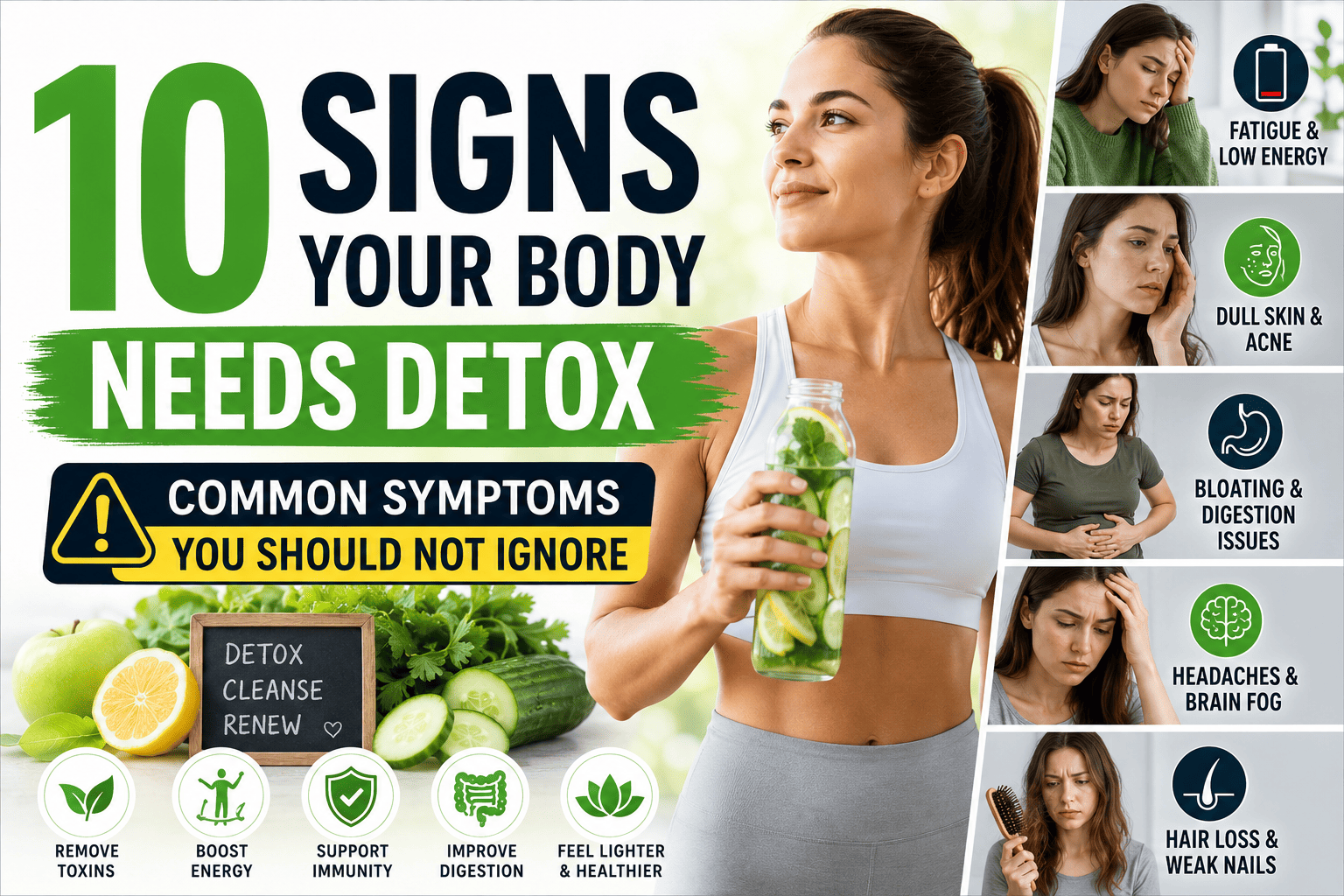
The word “Detox” means free from toxins. Our body performs uncountable metabolism all the time and releases lots of waste. The human body already has a natural detox system—primarily through the liver, kidneys, lungs, gut, large intestine and skin for removing waste.
However, we live in a world where we’re exposed to more toxins than ever before. So instead of relying on marketed “detox products,” the goal should be to support your body’s natural detox pathways through proper nutrition and lifestyle choices.
Your liver is your largest internal organ that’s responsible for far more than just detoxifying on a daily basis. It also plays a crucial role in digestion (especially of fats), hormonal balance, and energy production. There are many signs that your body might be presenting if your liver is not functioning optimally. So we have weight gain, bloating, brain fog, just feeling like you can’t connect the dots, that your memory isn’t as sharp as normal, headaches, aches and pain throughout the body.
One of the best ways to do this is by removing processed and junk foods from our diet and replacing them with whole, nutrient-dense foods that support detoxification. This includes vegetables, fruits (especially berries), healthy fats, and high-quality proteins like wild-caught fish and grass-fed meats.
Let us discuss some warning signs which shows that your body may be overloaded with toxins-
Our bodies often give us signals when something is out of balance. One of the most common signs is PERSISTENT FATIGUE—feeling low on energy, sluggish, or lacking motivation. Ongoing exhaustion may signal imbalance in stress hormones or overall health. Supporting your body with proper nutrition, sleep, and stress management is essential. If you constantly feel tired despite adequate rest, it may indicate that your body is struggling to function efficiently and need detox.
Another common symptom is HEADACHE, particularly tension headache or dull headache that occur at the back of the neck and shoulders may occur due to congestion of blood or due to excess accumulation of toxins. Tightness in the trapezius muscle can sometimes be associated with stress and physical strain, may also be linked to liver function, which plays a key role in detoxification.
Next one is CONSTANT CRAVINGS (especially for sugar and refined carbs).
If you’re craving sweets, this is another indicator that your liver, your blood sugar is imbalanced. Frequent cravings for sugar or processed foods may indicate imbalance. These foods cause spikes and crashes in energy and dopamine, leading to addictive cycles. Reducing these foods can stabilize energy levels over time.
Yellowing, especially in the corners of your eyes, or if you’re at a more advanced stage of your liver kind of shutting down, so you must know that the yellowing of the skin, your liver helps to process the bilirubin within your body, and so if you are presenting with that complaint, seek medical attention right away.
The next important symptom is BRAIN FOG- Difficulty in focusing or thinking clearly may be linked to inflammation caused by toxin buildup. Reducing processed foods and eating anti-inflammatory whole foods can help improve mental clarity.
Another is SKIN PROBLEMS- Skin conditions are also frequently mentioned as signs of internal imbalance. Issues such as eczema (often found in the folds of the elbows and knees), psoriasis (typically on outer skin surfaces), and acne may reflect underlying factors affecting the body or sometimes reflect internal imbalance. Supporting liver function, improving diet, and reducing exposure to harsh chemicals may help improve skin health.
Any kind of skin eruptions, whether it be breakouts, this is a way that toxins are trying to get out through the pores. There’s buildup and it’s trying to get out in any way possible.
Other possible indicators include BAD BREATHE (also known as HALITOSIS), foul body odor and changes in the skin microbiome, which may suggest internal imbalances. This indicates that there are toxins building up inside our body trying to get out.
Sometimes INCREASED FOOD SENSITIVITIES also denotes toxicity in our body. Developing sensitivities over time may be linked to gut imbalance. Supporting gut health by reducing sugar intake and eating whole foods can help restore balance.
If you’re having increased sensitivities, whether it be to different foods that you used to be non-reactive to, or chemicals, and you feel immediately exhausted and just like you get a headache, brain fog, that is an indicator that your liver just can’t keep up, it is overburdened.
Next is JOINT PAIN AND INFLAMMATION-chronic soreness can be associated with inflammation. Including anti-inflammatory foods like leafy greens, berries, and healthy fats can help reduce discomfort.
Next symptom is DIFFICULTY IN LOSING WEIGHT (especially belly fat)- A sluggish metabolism or liver function may contribute to weight retention. Reducing processed foods, alcohol, and added sugars while eating nutrient-rich foods can support metabolic health.
Our liver is responsible for converting up to 60% of T4 inactive thyroid to T3 active thyroid, and our thyroid gland is responsible for your metabolism and helping your body to process those hormones so that you can stay at the weight that you are intended to be at. When the liver is not functioning properly, your thyroid isn’t getting converted, you will be holding on to weight, to fluids, and weight loss despite of all best efforts just might not be as easy for you when the bucket is full of toxins.
Another symptom is body aches and pain. Due to excess toxins accumulating in our body, our body feels congested, and blood supply gets interrupted, which may leads to pain. You may also notice hair thinning, brittle nails, or dull skin, which also denotes accumulations of various toxins in our body, which are rearranging our health.
So there are lots of signs and symptoms. Certainly there are so many more because of all the responsibilities that the liver has within the body to keep you functioning on a normal basis. If you’re experiencing that itchy skin, weight gain, the bloating, the fatigue, the brain fog , then your liver needs some support.
Here are few tips for natural detoxification:
Reduce your toxic load, eat minimally processed foods, limit exposure to chemicals in food and personal care products, eat foods like leafy greens, cruciferous vegetables, berries, garlic, and healthy proteins, stay hydrated and maintain a balanced lifestyle.
In short, detoxing isn’t about buying special products—it’s about consistently supporting your body through healthy habits. Long-term wellness comes from sustainable lifestyle choices.